NFPA 70B Compliance: Five Questions to Find Your Gaps
David Weszely, Instructor & Training Manager
October 22, 2026
NFPA 70B made electrical maintenance a requirement, not a recommendation. The harder question is whether your facility could prove it’s in compliance today.
Many companies find they have many of the components that contribute toward NFPA 70B compliance but they fall short of the documentation and processes needed to qualify as a true NFPA 70B Electrical Maintenance Program (EMP).
Let’s start with some simple questions to set a baseline of where you currently stand.
PLAN – Do you have a properly documented Electrical Maintenance Program (EMP) plan?
The most significant component of NFPA 70B compliance is proper documentation and tracking. Do you have a named EMP coordinator? I do not mean a group or team, but do you have a specific individual responsible for tracking and updating the program? Do you have a complete inventory of all distribution equipment, not just the primary equipment, documenting asset condition and the required maintenance procedures? Have you cross-referenced equipment condition of maintenance to your safety program, so workers understand how hazards are affected by it? Do you review system updates and expansions for maintainability?
I have found that many facilities will have bits and pieces of this but they haven’t connected them and tracked them at the asset level. This goes much further than a binder on the shelf for your safety program, another for general procedures and another with test results.
DO – Is the work actually getting done?
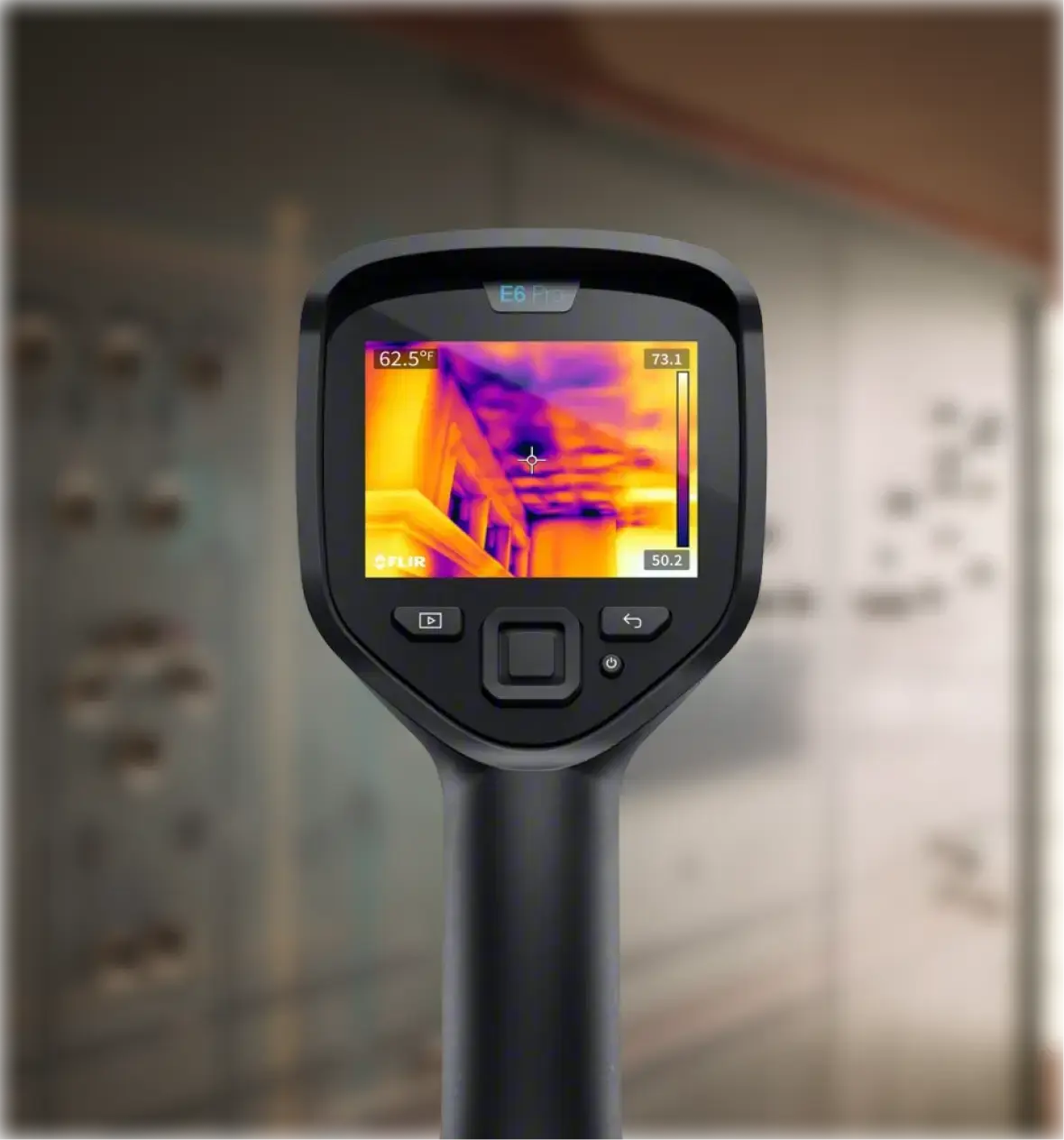
Are inspections, testing and servicing being completed on schedule, for every asset in the inventory? Is your infrared thermography inspection being performed each year, and does it cover all equipment? Has an arc flash risk assessment been done for your system? It provides much of the supporting material (one-line, short circuit, incident energy) the planning stage relies on. If no master equipment inventory exists, the first step is to create one and document visual condition. An easy next step is to start infrared inspections immediately while you plan the overall maintenance approach.
PROVE – Can you prove the EMP?
This is what many facilities miss. The EMP is only valid if you can prove it with specific documentation. The work must be documented, dated, assigned to who performed it, and the results must be retained. If it isn’t documented, it didn’t happen.
IMPROVE – Does the electrical maintenance program close the loop?
Findings drive the program. You assign work to correct problems found, update the status and change the maintenance interval accordingly for the next round. Your safety program is informed by NFPA 70E and the arc flash risk assessment, and those results are only as reliable as the condition of maintenance that NFPA 70B testing verifies. Hopefully you’re starting to see the interconnection here: this is a living, breathing ecosystem that should be monitored and actively updated based on feedback. These processes and procedures are intertwined and documented.
How one facility’s efforts fell short
We recently helped a safety director with a manufacturing facility who felt they were ahead of the curve. They had a safety program, did infrared inspections yearly and performed equipment maintenance. Unfortunately, a breaker failure took down an entire line for 48 hours. The breaker was in a small, single-section switchboard that staff had forgotten was even there. With no master equipment list, and maintenance focused only on “large” equipment, it had been skipped for years on both the infrared scans and planned maintenance.
Worse, the breaker had likely seen a fault that welded its contacts closed prior to the final failure, so it could never open to protect the circuit downstream. Unfortunately this would have caused the incident energy at the control panel it fed to be incorrect. Instead of an 8 cal/cm² hazard, it was 36 cal/cm². Any technician testing or troubleshooting that panel would not have been properly protected.
How do you measure up to these electrical maintenance requirements?
At Lume Safety, we strengthen electrical safety by bringing risk and compliance gaps to light before something goes wrong. Our NFPA 70B compliance assessment can help. We perform an onsite assessment documenting all of your distribution equipment and logging visual condition, review the documentation you have for key components, and provide an overall report. The report shows exactly where you land compared to what NFPA 70B requires for an EMP, and gives you a step-by-step program to achieve compliance, with timeline and approach. Findings may lead to preventive maintenance, infrared inspections, testing, documentation, arc flash updates, NFPA 70E training or broader program support.
Reach out to the Lume Safety team today to get started with an NFPA 70B compliance assessment so you know where you stand.